I. The Evolution of the Modern Path to Purchase
The B2B buying landscape has undergone a seismic shift. If you are still operating under the assumption that your sales team is the primary source of information for your prospects, your growth strategy is likely built on a foundation of sand. In the modern era, the "funnel" is no longer a straight line; it is a complex, multi-touch exploration driven entirely by the buyer.
The Paradigm Shift
Historically, marketing's job was to "push" messaging out, and sales' job was to "pull" the prospect across the finish line. Today, the buyer is in the driver's seat. According to recent studies by Gartner,
B2B buyers spend only 17% of their total purchase journey meeting with potential suppliers.
When you consider that they are likely looking at three different vendors,
Your specific sales team might only get 5% or 6% of their total attention.
Where is the other 80-90% of their time spent? It is spent on independent research, internal stakeholder meetings, and peer-to-peer verification. This guide is designed to help you "own" that 80% of the journey. By aligning your marketing efforts with the psychological and logistical steps your buyer takes, you move from being a "vendor" to becoming a "strategic partner."
Defining "Reliable Growth"
At Aspiration Marketing, we don't just talk about "more leads." We focus on reliable growth. This is the process of building a predictable revenue engine by removing the guesswork from your marketing. When you understand the Buyer's Journey, you stop guessing what content to write or which ads to run. You provide exactly what the buyer needs at the exact moment they need it, creating a frictionless path from "stranger" to "promoter."
II. Why the Buyer's Journey is Your Roadmap to Growth
The Psychology of the Choice
To master the journey, we must first understand the human mind. B2B purchases are often viewed as purely logical, but the psychology of choice tells a different story. Every purchase is a risk. In B2B transactions, "buyer’s remorse" can manifest as a failed implementation, a wasted budget, or a lost job.
As a result, the buyer’s journey is essentially a risk-mitigation exercise.
-
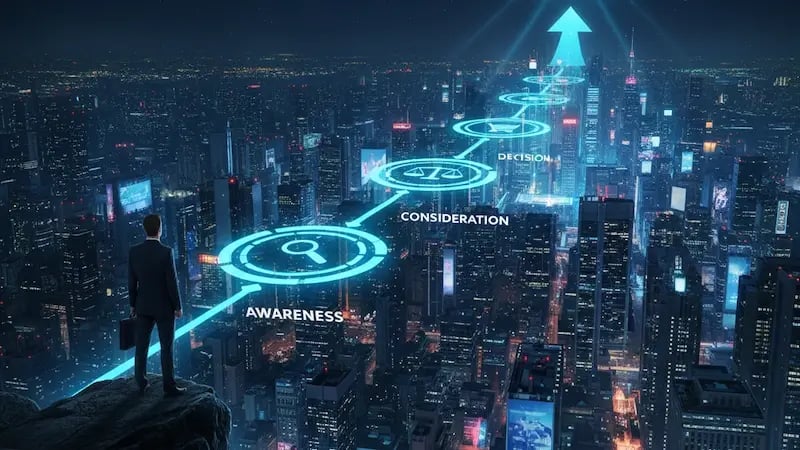
Early Journey (Awareness): The mind seeks safety in numbers (reviews, industry standards).
-
Mid-Journey (Consideration): The mind is looking for competence (expert insights, case studies).
-
Late Journey (Decision): The mind is seeking reassurance (e.g., ROI guarantees, support structures).
Navigating the Three Pillars of Reassurance
1. Early Journey: Seeking Validation and "Safety in Numbers."
In the Awareness stage, the primary risk is misdiagnosis. The buyer is asking: "Is this problem real, and am I the only one facing it?" To mitigate this, the human brain seeks social proof and industry standards to validate its experience. They aren't looking for "innovative" or "disruptive" solutions yet; they are looking for validity.
-
The Psychological Need: Conformity and Consensus.
-
Content Strategy: Lean heavily on third-party industry reports, "state of the industry" surveys, and high-level reviews.
-
The Message: "You aren't alone. Leading firms in your sector are identifying this same challenge, and here is how the market defines it."
2. Mid-Journey: Seeking Evidence of Competence
As the prospect moves into the Consideration stage, the risk shifts from the problem to the approach. The fear here is incompetence—either their own in choosing a solution, or the vendor's in delivering it.
The mind is now scanning for deep expertise. They want to know that you don't just have a product, but that you have a "mental model" for success.
-
The Psychological Need: Authority and Trust.
-
Content Strategy: Expert-led webinars, technical whitepapers, and detailed case studies that show a clear Before vs. After.
-
The Message: "We have solved this specific iteration of the problem dozens of times. Here is the data-backed methodology we use to ensure success."
3. Late Journey: Seeking Reassurance and Resilience
In the Decision stage, the risk is finality. Once the contract is signed, the buyer is "locked in." The fear now is abandonment—the worry that the sales team will disappear and leave them with a complex tool they can't use.
Reassurance at this stage must be tangible and logistical. The buyer needs to see the safety net.
-
The Psychological Need: Security and Support.
-
Content Strategy: Implementation roadmaps, Service Level Agreements (SLAs), ROI guarantees, and direct access to Customer Success stories.
-
The Message: "We are invested in your long-term outcome. Here is exactly what your first 90 days look like, and here is the support structure standing behind you."
Why "Risk Mitigation" Leads to Reliable Growth
When you frame your marketing as a risk-reduction service, you stop being a "vendor" trying to take their money and start being a "partner" protecting their interests.
Data shows that B2B buyers are 2.8x more likely to experience a high-quality, low-regret deal when the supplier provides information specifically designed to simplify the purchase process and reduce perceived risk.
By mapping your content to these three psychological needs, you create a frictionless path to a "Yes."
III. Stage 1: The Awareness Stage – Identifying the Catalyst for Change
The Awareness Stage is the most critical and often the most neglected part of the journey. This is where the seed of a sale is planted. At this point, your prospect isn't looking for you; they are looking for an answer to a symptom.
The Awareness Stage: A Quick Summary
The Awareness Stage is the diagnostic phase of the buyer's journey. At this point, your prospect is not looking for a vendor; they are looking for a name for their pain. They are experiencing "symptoms"—declining revenue, inefficient workflows, or high churn—and are searching for the root cause.
-
The Goal: Move the prospect from "unconscious problem" to "active research" by providing high-value educational content.
-
The Key Driver: The catalyst for change. You must identify the specific internal or external trigger that disrupted their status quo.
-
The Strategy: Mastering modern buyer awareness. This means shifting away from "me-centric" selling and toward "them-centric" helping.
-
The Value Benchmark: Provide 10x content. Your information must be ten times more valuable, data-driven, and insightful than the following best result to win their trust early.
-
The Core Insight: In the Awareness stage, you don't win by being the loudest; you win by being the most helpful. When you help a buyer define their problem, you are the only one they will trust to define their solution.
Pinpointing the Catalyst: What Triggers a Search?
No one wakes up and decides to spend $50,000 on a new CRM for fun. Something happened. This is the catalyst for change. This is the moment when you start your buyer's journey.
Two different kinds of catalysts kick-start this:
-
Internal Catalysts: Organizational shifts, such as the appointment of a new CEO, budget cuts, or a failure of existing software.
-
External Catalysts: A new industry regulation, a competitor's aggressive move, or a technological breakthrough, such as Generative AI.
As we've outlined in our blog about understanding that catalyst moment, the Awareness stage isn't a random event. It is a reaction. By identifying whether your buyer is responding to an operational catalyst (inefficiency) or a strategic catalyst (growth goals), you can tailor your messaging to meet their specific psychological state from minute one.
The Three Pillars of Modern Awareness
In the past, awareness was primarily concerned with frequency and reach. Today, it is about relevance and authority. Creating sufficient awareness is the growth engine that drives business scaling and helps you meet your goals. To master this stage, a growth-oriented business must focus on three core pillars:
-
Educational Authority (The "Why" over the "What") Modern buyers have a high "BS detector." If your awareness content feels like a sales pitch, they will bounce. To master modern buyer awareness, the goal is to provide 10x more value than your competitors. This means answering the questions your prospects are afraid to ask their boss, such as: "Why is our current system failing?" or "What is the true cost of doing nothing?"
-
Omnichannel Presence (Meeting them where they live). Awareness doesn't just happen on your website. It happens on LinkedIn, in industry newsletters, and in private Slack communities. Modern awareness strategies involve "dark social"—the areas where buyers discuss problems out of sight of your tracking software.
-
Strategy: Distribute "native" insights. Instead of just posting links, share the "Aha!" moments directly on social platforms to build brand equity before they ever click through to your site.
-
-
Data-Driven Intent (Predicting the Catalyst) Modern awareness uses tools like HubSpot and 6sense to identify intent signals. If a company is suddenly searching for topics related to "data security breaches" in your industry, you don't wait for them to find you—you ensure your awareness-stage content is placed in front of them through targeted SEO and social promotion.
Why this is the "Growth Engine"
Mastering modern awareness is the cornerstone of reliable growth. Without a steady stream of prospects entering the top of the journey with a clear understanding of their problem, your Consideration and Decision stages will eventually starve.
Expert Insight: "Modern awareness isn't about being known by everyone; it's about being known by the right people at the exact moment their status quo becomes unbearable."
Statistics that Matter for Awareness
-
70% of buyers return to Google 2-3 times during the Awareness stage to refine their understanding of their own problem.
-
AdWords and PPC are often less effective here than high-quality organic SEO. Why? Because the buyer is looking for an authority, not a pitch.
-
Thought Leadership: 54% of decision-makers say they spend more than an hour a week reading thought leadership content.
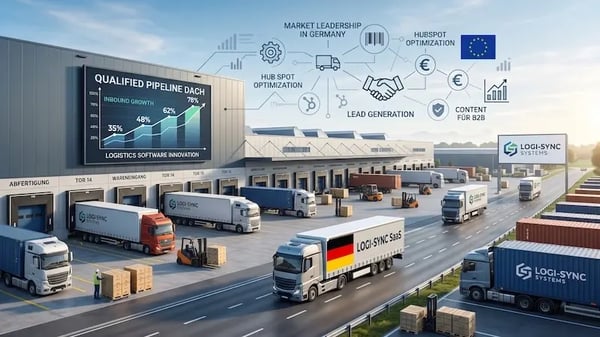
Awareness Case Study: The Logistics Firm
Imagine a logistics company struggling with "late deliveries."
-
Wrong Approach: Running an ad that says "Buy our Logistics Software – 20% off!" (The buyer isn't ready for a solution yet).
-
The Aspiration Approach: Creating a guide titled "5 Hidden Reasons Your Fleet is Running Behind Schedule." This guide helps the buyer diagnose the problem (e.g., poor route optimization). Now, the buyer associates your brand with the solution to their specific pain.
As we've discussed in our blog on Mastering Modern Buyer Awareness strategies, you must approach this stage like a diagnostic physician. If a patient has a cough, you don't sell them lung surgery. You explain why the cough is happening. In marketing, this means creating content that addresses the specific needs or concerns.
Optimal Content for the Awareness Stage

-
Educational Blog Posts: These should be "How-to" or "What is" style.
-
Example: "What is Loop Marketing and Why Should B2B Tech Care?"
-
-
Whitepapers & Original Research: B2B buyers crave data. If you can provide a "State of the Industry" report, you become the primary source for their entire research phase.
-
Social Media Snippets: Awareness occurs where your buyers spend their time. On LinkedIn, this means sharing insights, not links.
-
Podcasts and Video: 90% of B2B buyers say they are influenced by video in the early stages because it builds a human connection before a sales call ever happens.
IV. Stage 2: The Consideration Stage – Navigating the Search for Solutions
If the Awareness stage is about diagnosing the "why," the Consideration stage is about the "how." The buyer has moved past the symptoms and has clearly defined their problem. They are now committed to researching and understanding all available approaches to solving it.
The Consideration Stage: A Quick Summary
The Consideration Stage is the evaluation phase. The buyer has successfully named their problem and is now committed to researching every possible methodology to solve it. This is the "messy middle" where buyers weigh different categories of solutions—not just different brands.
-
The Goal: Position your approach (your category) as the most logical and effective way to address the problem.
-
The Key Driver: Competence and Trust. The buyer's mind is actively trying to mitigate the risk of picking the wrong path.
-
The Strategy: The Trusted Advisor. You move from diagnosing symptoms to recommending specific "treatments," providing the data they need to build an internal business case.
-
The Value Benchmark: Comparative Transparency. Provide side-by-side evaluations that help the buyer understand the pros and cons of each approach, including the option of "doing nothing."
The "Messy Middle" of Decision Making
In B2B marketing, the Consideration stage is often the longest phase. It is characterized by heavy research and a shift from emotional pain points to logical evaluation. At this point, your prospect is asking:
"Which category of solution fits my specific business constraints?"
It is vital to understand that they aren't just comparing you to your direct competitors. They are comparing approaches.
-
Approach A: Can they figure this out themselves? Build an in-house solution (DIY)?
-
Approach B: Hire a specialized agency or consultancy to help them determine what they need and how to obtain it, and/or do it for them.
-
Approach C: Purchase a "SaaS" or "off-the-shelf" software product.
Winning the "Critical Moment"
During this phase, you must position yourself as a trusted advisor. According to a study by Demand Gen Report,
67% of B2B buyers rely more on content to research and make purchasing decisions than they did a year ago.
If you aren't providing the comparison data they need, they will find it from a more transparent competitor.
Data-Driven Insights for Consideration
-
The Power of Reviews: 92% of B2B buyers are more likely to purchase after reading a trusted review.
-
The Stakeholder Effect: During consideration, the buying committee often expands. You need content that speaks to the "User" (usability) and the "Technical Buyer" (security and API integration)
Optimal Content for the Consideration Stage

To build authority, your content must move from "educational" to "evaluative":
-
Comparison Whitepapers: Don't shy away from comparing your solution to others. A "Vendor Comparison Matrix" is one of the most downloaded assets in B2B marketing.
-
Case Studies (The "Proof" Phase): These shouldn't just be testimonials. They need to be deep dives. Example: "How [Company X] Reduced Operational Costs by 30% Using Automated Workflow Management."
-
Expert Webinars: Live interactions allow you to answer the "Yes, but..." questions in real-time. It humanizes the brand during a highly analytical phase.
-
ROI and TCO Calculators: "Total Cost of Ownership" (TCO) is a significant concern. Providing a tool that helps them calculate this internally is a high-value move that builds massive trust.
V. Stage 3: The Decision Stage – Closing the Gap and Converting
We have reached the "bottom of the funnel." The prospect has selected their preferred approach and has narrowed their list down to 2 or 3 specific vendors. The Decision stage is not about teaching; it is about validation and removing friction.
The Decision Stage: A Quick Summary
To win at the decision stage, you must first understand the buyer's psychology. By this point, the prospect has narrowed their choices down to a handful of vendors. You've already brought them down through the buyer research and awareness stage and the buyer consideration stage. They are likely feeling a mix of excitement and anxiety. They want the benefits of your product, but they are also concerned about making the wrong choice that could cost their company time and money.
-
The Goal: Remove every final friction point to convert the lead into a customer.
-
The Key Driver: Reassurance and Resilience. The buyer needs to know they won't be abandoned after the sale and that the implementation will be seamless.
-
The Strategy: Mastering Conversion Insights. Transitioning to a high-transparency model that focuses on the "First 90 Days" of success.
-
The Value Benchmark: Frictionless Validation. Making it as easy as possible for the IT, Legal, and Finance stakeholders to say "Yes."
The Psychology of the Final Nudge
In the Decision stage, the buyer's primary emotion is fear of making the wrong choice. They are looking for reasons not to buy from you to protect themselves. Your job is to provide the "Final Polish" that makes the choice obvious.
As Gartner points out,
B2B buyers spend only 17% of their total purchase journey meeting with potential suppliers. Divided among three vendors, your specific team might only get 5% to 6% of their total attention.
Every touchpoint must be perfect.
Conversion Strategies That Work
Success in the Decision Stage is measured by your ability to transform a "Lead" into a "Customer." This requires a calculated shift in tone. While the Awareness stage was inquisitive and the Consideration stage was evaluative, the Decision stage must be persuasive and direct. You are no longer suggesting a path; you are proving why you are the only safe choice.
1. Transparency as a Competitive Advantage
For decades, B2B companies treated pricing like a state secret, hiding it behind "Request a Quote" buttons to force a sales conversation. In the modern journey, this is a growth killer.
Research shows that 46% of B2B buyers will abandon a site immediately if pricing is not clear or if they are forced to jump through too many hoops to understand the investment.
Why Transparency Wins:
-
Signaling Honesty: When you lead with transparency, you signal that you have nothing to hide. It builds immediate psychological safety.
-
Qualified Conversations: Buyers who are aware of your pricing before the call are already mentally committed to their budget. This eliminates "sticker shock" late in the sales cycle.
-
Self-Selection: Transparency helps non-fit prospects filter themselves out, saving your sales team hours of unproductive time and protecting your customer acquisition cost (CAC).
Actionable Insight: If you can't provide a flat rate due to complexity, provide a "Starting At" price or an interactive pricing calculator. This gives the buyer the data they need for their internal business case without compromising your margins.
2. Lowering the Barrier to Entry: Removing "Start-Up Friction."
The "final moment" of a deal often hinges not on the product's features, but on how easy it is to get started. Buyers are terrified of a "failed implementation"—a project that takes six months to launch and never delivers value. To counter this, your conversion strategy must focus on momentum.
-
The "Touch the Product" Strategy (Free Trials/POCs): In the AI and SaaS era, "seeing is believing" is no longer enough. Buyers want to "touch" the product. Providing a Proof of Concept (POC) or a limited-access free trial allows the "User Buyer" to validate your claims in real-time. This shifts the conversation from "Does it work?" to "How will we use this tomorrow?"
-
The Implementation Roadmap (The First 90 Days): Nothing kills a Decision-stage deal faster than ambiguity about the "day after" the contract is signed. To mitigate this, provide a visual implementation roadmap.
-
Day 1: Account setup and data migration kickoff.
-
Day 30: Team training completed and initial workflows live.
-
Day 90: First "Reliable Growth" ROI report generated. When a buyer can see the path to their first "win," the risk of the purchase drops significantly.
-
3. Precision Closing: Speed-to-Lead and Response Integrity
In a world where you have only 5% to 6% of the buyer's attention, speed is a significant competitive advantage. Data from the Harvard Business Review suggests that
Firms that contact prospects within an hour of receiving an inquiry are 7x more likely to have a meaningful conversation than those who wait even 60 minutes.
The "Aspiration" Standard for Conversion:
-
Instant Gratification: Utilize automated scheduling tools (such as HubSpot Meetings) to enable a Decision-stage buyer to book a demo immediately, rather than waiting for a callback.
-
Stakeholder-Specific Closing Assets: Ensure your sales team is armed with one-page "decision briefs" tailored for the key stakeholders.
Decision Stage Statistics
-
Customer Stories: 88% of buyers say that case studies are the most influential content at the Decision stage.
-
Speed to Lead: If you respond to a demo request within 5 minutes, you are 21 times more likely to qualify that lead than if you wait 30 minutes.
Optimal Content for the Decision Stage

-
Detailed Vendor Comparisons: A final, objective look at why your specific features outperform the competition.
-
Implementation Guides: Documentation that proves your team can handle the transition without disrupting their business.
-
Security and Compliance Briefs: Essential for the "Technical Buyer" and "Legal" stakeholders who often enter the journey at the very end.
-
Live Demos: Not a canned recording, but a personalized walkthrough that addresses the specific pain points identified in the Awareness stage.
Optimal Content for the Decision Stage
-
Detailed Vendor Comparisons: A final, objective look at why your specific features outperform the competition.
-
Implementation Guides: Documentation that proves your team can handle the transition without disrupting their business.
-
Security and Compliance Briefs: Essential for the "Technical Buyer" and "Legal" stakeholders who often enter the journey at the very end.
-
Live Demos: Not a canned recording, but a personalized walkthrough that addresses the specific pain points identified in the Awareness stage.
VI. Technical Implementation: Architecting the Journey
Understanding the journey is one thing; building the infrastructure to track and optimize it is another. To achieve reliable and predictable growth, you need a robust tech stack that automates the movement of leads through these stages.
Deep Dive: Architecting the Journey in HubSpot
To transition from a conceptual understanding of the buyer's journey to a revenue-generating engine, you need a technical "source of truth." For most growth-oriented B2B firms, HubSpot is the solution. Here is how you architect each stage of the journey within your portal to ensure no lead falls through the cracks.
1. Automating the Awareness Stage: The "Symptom" Tracker
At the Awareness stage, your goal is to identify interest without being intrusive.
-
The Logic: Use Active Lists to segment users the moment they interact with awareness-level content.
-
The Setup: Create a list of "Awareness Leads" defined by page views on URLs containing keywords like /blog/what-is/ or /how-to/.
-
The Action: Trigger a "light-touch" workflow. If a lead visits three awareness blogs in 48 hours, HubSpot can automatically send a follow-up email offering a "Beginner’s Guide" PDF related to those topics. This moves the user from an anonymous visitor to a known contact (MQL).
2. Scoring Intent in the Consideration Stage
This is where Predictive Lead Scoring becomes your most valuable asset. Not all clicks are created equal.
-
Positive Attributes: Give +15 points for viewing the "Pricing" page, +20 points for "Competitor Comparison" downloads, and +10 points for attending a webinar.
-
Negative Attributes: Subtract -50 points for "Careers" page visits or if the "Industry" property equals "Student" or "Competitor."
-
The Threshold: Once a lead hits a score of 50, the HubSpot workflow should automatically update their lifecycle stage to "Sales Qualified Lead" (SQL) and notify the appropriate account executive.
3. Precision Outreach in the Decision Stage
In the Decision stage, timing is everything. Use HubSpot Sales Hub to provide your sales team with "Real-Time Intelligence."
-
The Scenario: A prospect you haven't spoken to in two weeks suddenly opens your "Security and Compliance" whitepaper.
-
The Implementation: Set up a Slack or Microsoft Teams integration that pings the salesperson the second that document is opened. This allows the representative to follow up while the prospect is actively considering the final hurdles of the purchase.

VII. The Implementation Checklist: Auditing Your Journey
If you feel your buyer's journey is underperforming, perform this Content-to-Journey Audit.
-
Map Your Existing Content: Create a spreadsheet with four columns: URL, Topic, Target Persona, and Journey Stage.
-
Identify Gaps: Do you have at least 3 pieces of content for every stage (Awareness, Consideration, Decision)?
-
Identify the "Dead Ends": Look for content that doesn't have a clear Call-to-Action (CTA). If a prospect finishes an Awareness blog, is there a clear link to a Consideration asset? If not, you are losing them to "The Void."
-
Persona Alignment: Does your content address your target personas? Does each piece target a specific persona, or are you targeting multiple viewpoints with one piece?
-
Keyword Intent: Are your Awareness keywords "symptom-based" or "product-based"? (Hint: They should be symptom-based).
-
Analyze the "Bounce Points": Use HubSpot's Page Analytics to see where people leave your site. If they bounce after viewing the pricing page, your Decision-stage value proposition isn't strong enough.
-
Interview Your Latest Customers: Ask them, "What was the one piece of information that made you trust us?" and "What was the most frustrating part of your research?" Their answers are the roadmap for your next content batch.
-
Attribution: Can you identify which blog post initially led to your last five customers?
VII. Your Partner in Reliable Growth
Mastering the buyer's journey is a continuous process in itself. It requires a deep commitment to understanding the human on the other side of the screen. When you align your marketing and sales efforts with the path your buyers are already taking, you don't just increase your conversion rates—you build a brand that is respected and trusted.
At Aspiration Marketing, we believe that growth should be predictable, scalable, and reliable. We specialize in helping B2B organizations bridge the gap between complex buyer behaviors and measurable business results. Whether you need a full HubSpot implementation or a content strategy that speaks to every stage of the journey, our team is here to help you architect your success.