2. The Strategic Foundation: Why CRM Matters Now
To understand why HubSpot is winning the market, we must first address a fundamental strategic confusion that plagues many growing businesses: the distinction between having a system for your business's operations and a system for driving customer growth. In most cases, those are two different things. This is most clearly seen in the comparison between ERP and CRM systems.
ERP vs. CRM: The Kitchen and the Dining Room
When it comes to customer management and growth strategy, these two systems serve vastly different masters. Imagine your business is a high-end restaurant. Your Enterprise Resource Planning (ERP) system is the kitchen. It manages the inventory, the cost of ingredients, the payroll for the chefs, and the logistics of the supply chain. It focuses on internal efficiency, cost reduction, and other areas. It controls all the different moving parts that are necessary.
Your Customer Relationship Management (CRM) system, however, is the dining room. It's where the customer experience happens. It tracks the guest's preferences (does the prospect prefer technical demos or business-level summaries?), their previous visits, their feedback, and their satisfaction. It is focused on external growth and revenue.
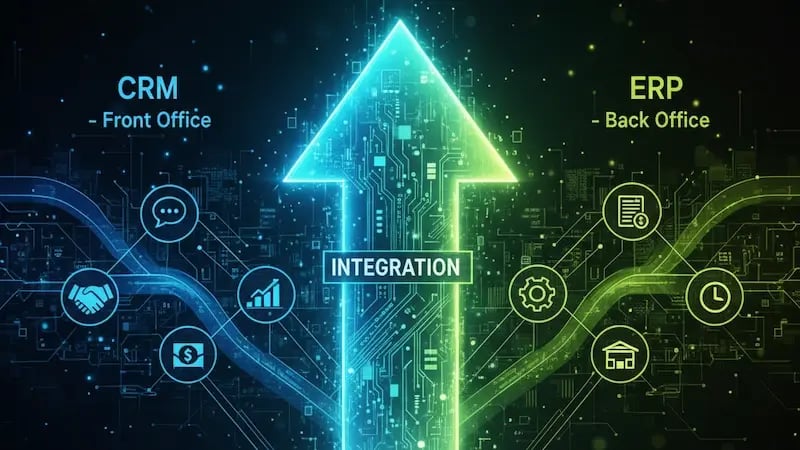
Many businesses attempt to force an ERP to manage customer relationships, resulting in a cold, rigid experience for the buyer. Conversely, trying to manage complex logistics through a CRM can lead to operational chaos. Each system has its strengths. But if a company wants to grow, it needs customers. Therefore, a growth-oriented company needs a CRM to function as its "front office" - something that makes the customer feel seen, valued, and understood. In the age of the customer, that dining room experience we mentioned earlier is often what justifies the price of the meal.
Growth vs. Control: The Scale-Up Dilemma
When choosing a technology stack, companies—especially those in the software and tech startup space—often face a choice between specialized tools and all-encompassing platforms. Intuitively, companies tend to lean towards an all-encompassing platform that should yield more benefits with their investment, but that's not entirely true. Things can get more complicated. This can best be seen in our comparison between HubSpot and DingTalk, an enterprise organizational software developed by Alibaba. You'll know that they have two very different philosophies.
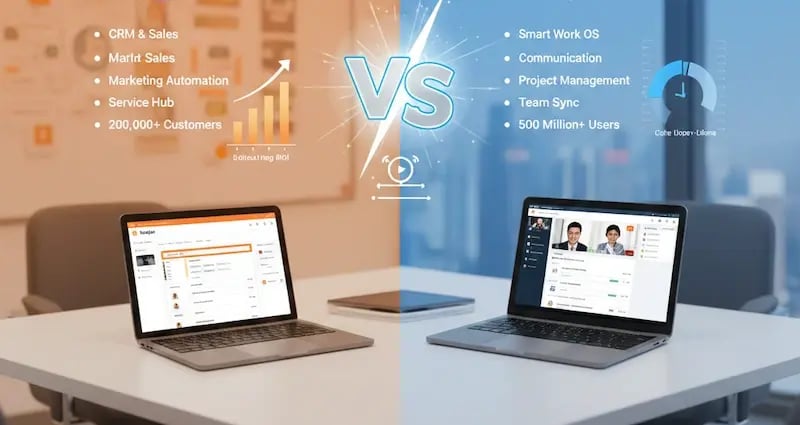
DingTalk represents the ultimate control environment. It is an incredible tool for operational task management, internal communication, and hierarchical oversight. For a manufacturing firm with strict top-down processes, it is a powerful tool. However, for a marketing-driven or sales-led organization, this level of control can become a straitjacket. Growth is a secondary feature to efficiency.
HubSpot, on the other hand, leans heavily into the "Growth" philosophy. It empowers teams by providing a framework that scales with them rather than imposing a rigid structure that punishes deviation. While it offers robust reporting and governance (control), its primary purpose is to remove friction from the path of the salesperson and the marketer. It empowers the tech startup to move fast, experiment with messaging, and pivot strategies without needing a six-month IT project to reconfigure the database.
The Shift from Static to Dynamic Data
The era of static data is over. In the past, a CRM record was a snapshot: Name, Email, Last Purchase. It was a tombstone—a record of something that happened in the past. Today, a HubSpot record is a living, breathing entity.
Through automated tracking and integrated website analytics, a record in HubSpot is updated in real-time based on user behavior. This is the shift from Lists to Segments. If a prospect watches a video on your site, HubSpot doesn't just record the view; it can trigger a workflow that updates the prospect's Lead Score, alerts the assigned salesperson, and changes the content they see on your homepage the next time they visit.
This dynamic nature is the foundation of winning more business. It enables your team to respond to a customer's current actions, rather than their past behavior. By focusing on the "front office" and adopting a growth-first mindset, businesses can move beyond the "idling" phase and start to realize the actual compounding value of their customer data.
3. Navigating the Modern Buyer's Journey
To win more business in a competitive landscape, you must stop selling to leads and start solving for people. At Aspiration Marketing, our philosophy is that the Buyer's Journey—the path from total stranger to loyal customer—is fundamentally a risk-mitigation exercise. Every time a prospect interacts with your brand, they are subconsciously asking: "Is this a safe choice for my company and me?"
By mapping the HubSpot CRM toolkit to the three primary stages of this journey, you can provide the specific type of reassurance needed at each milestone.

Phase 1: Awareness – The Search for Safety and Validation
In the Awareness stage, the prospect is experiencing symptoms of a problem but may not yet have identified it by name. They are frustrated by an "idling engine" but don't know if the issue lies with their CRM, strategy, or team. At this point, they aren't looking for a product demo; they are looking for validation that their problem is real and solvable.
HubSpot’s Role: Use the Marketing Hub and the HubSpot Connector for deep inbound analysis to identify the "entry-point" questions your audience is asking.
-
Strategy: Create content that answers the "Why?" (e.g., "Why is my sales team missing targets?").
-
Tactical Execution: Use HubSpot's SEO tools to ensure you own the "safety" keywords in your niche. When a prospect finds an article that articulates their problem better than they could themselves, you have achieved educational authority. You have mitigated the risk of them feeling misunderstood.

Phase 2: Consideration – The Search for Competence and Mental Models
Once the problem is identified (e.g., "I need a CRM that integrates with my ERP"), the buyer enters the Consideration phase. Now, they are looking for a mental model to compare their options. They are judging your competence. They want to know: "Does this company actually know how to solve this for someone like me?"
HubSpot's Role: This is where Predictive Lead Scoring and Behavioral Segmentation take center stage.
-
Strategy: Within the Buyer's Journey, this is the time to provide competent content—such as case studies, technical whitepapers, and comparison guides.
-
Tactical Execution: Use HubSpot to track which specific "competence" the buyer is testing. If they spend ten minutes reviewing your security documentation, your sales follow-up shouldn't be about pricing; it should focus on data integrity and compliance. HubSpot's ability to surface these "intent signals" allows your sales team to appear psychic, providing precisely what the buyer needs to feel competent in their choice.

Phase 3: Decision – The Search for Reassurance and Support
The final stage is the most high-stakes. The buyer is about to commit budget and, more importantly, their internal reputation. They are looking for reassurance that they won't be left alone after the contract is signed.
HubSpot’s Role: Here, the Sales Hub and Service Hub must work in perfect tandem.
-
Strategy: Provide transparency. Utilize HubSpot's shared inbox and customer portals to demonstrate to the prospect exactly how they will be handled during the onboarding process.
-
Tactical Execution: Implement Sales Playbooks that guide your reps to ask the hard questions: "What happens if this implementation takes longer than expected?" By addressing these fears openly and showing the support infrastructure already in place in your CRM, you provide the final layer of reassurance needed to close the deal.
The Power of Educational Authority
Winning more business requires you to be somewhat of a teacher. By using HubSpot CRM data to identify the questions prospects are actually asking (and the ones they are afraid to ask), you can create a content strategy that builds trust before a salesperson ever picks up the phone. When you use your CRM to map out these psychological needs, you aren't just managing data; you are managing human relationships.
4. Competitive Showdowns: Choosing Your Growth Engine
Choosing a CRM is a long-term commitment. In our extensive analysis of the marketplace, we've performed comparisons between HubSpot and its primary competitors to help businesses understand where they will get the most "horsepower" for their investment.
HubSpot vs. Salesforce: The Power vs. Complexity Paradox
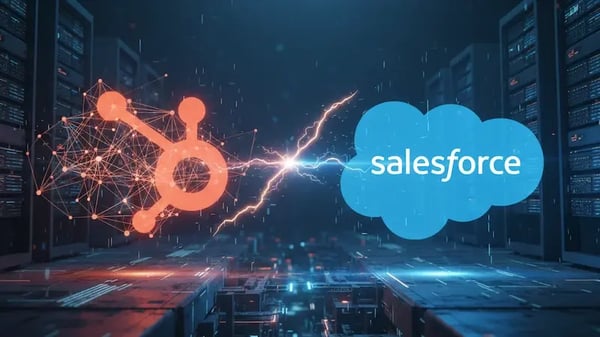
In any CRM discussion, Salesforce is the "incumbent giant." As we detailed in our comparison blog, the choice between these two platforms usually boils down to a fundamental trade-off: Maximal Customization (Salesforce) vs. Native Unification and Speed (HubSpot).
Salesforce is a leading industry powerhouse recognized for its extensive capabilities. Its sales cloud provides enterprise-level tools that can meet virtually any bespoke requirement. However, for many growing businesses, this raw power becomes a liability. We often see Salesforce instances turn into "Data Graveyards"—complex systems where data is input, but actionable insights are never generated because the interface is too cumbersome for the average sales representative to use consistently.
The Comparison:
-
Implementation Speed: Salesforce implementations are notorious for taking six months to a year, often requiring expensive external consultants or a full-time in-house administrator. In contrast, HubSpot's implementation is typically measured in weeks.
-
The "Frankenstein" Architecture: Salesforce has grown mainly through acquisitions (like MuleSoft, Tableau, and Slack). While powerful, these tools often exist on different backends. Achieving the level of cross-functional unity that HubSpot offers out of the box requires significant custom development and "duct-tape" integrations.
-
Total Cost of Ownership (TCO): With Salesforce, you pay for the base, then you pay for the add-ons, and then you pay the "integration tax" to connect them. HubSpot's "crafted, not cobbled" approach means your Marketing, Sales, and Service Hubs are built on the same native database, providing a predictable cost and a single source of truth from day one.
HubSpot vs. Pipedrive: The Growth Ceiling
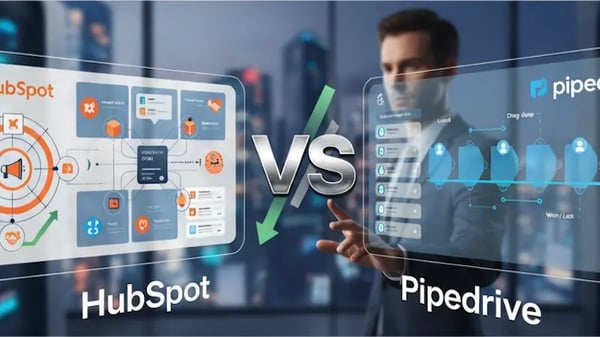
Pipedrive is an excellent, "Sales-first" tool. It is famously easy to use and provides a clean, visual representation of a sales pipeline. For a small team with a simple, high-volume sales process, it is a strong contender.
However, as we detailed in our comparison blog, most businesses eventually hit a growth ceiling with Pipedrive. Because Pipedrive focuses almost exclusively on the sales transaction, it creates a data silo. Your marketing team is unaware of what the sales team is doing, and your service team lacks visibility into what was promised during the sales process.
The Comparison:
The Visualization Strength: Pipedrive's core strength is its visual, Kanban-style pipeline. It excels at "Deal Rotting" alerts and activity-based selling. For a small, lean sales team where the rep is responsible for their own lead gen and follow-up, it is a high-performance tool.
-
The Integration Weakness: Pipedrive is a specialized tool. As your business grows, you will likely need to integrate third-party apps (such as Mailchimp for marketing or Zendesk for customer service). This creates a fragmented tech stack where data must be manually synced, often leading to "Sync Errors" and a disconnected customer view.
-
The HubSpot Advantage: While Pipedrive is a system for Sales, HubSpot is a platform for Revenue. HubSpot offers the same visual pipeline ease but integrates it natively with a full marketing suite. This means your sales reps don't just see a deal—they know every blog post, ad click, and email interaction that led to that deal. For HubSpot, it's not only about the agreement itself, but also about the customer. It is the transition from a "Sales Tool" to a "Growth Engine."
This level of cross-departmental synchronization is why HubSpot is the preferred engine for businesses looking to scale beyond the initial "hustle" phase.
HubSpot vs. Outreach: Integrated Platform vs. Specialized Tool
Outreach.io is a powerhouse for Sales Engagement. It is a precision instrument designed for high-volume outbound prospecting and complex sales sequencing. For teams that survive solely on cold outreach, it's a much-needed tool.
In our HubSpot vs. Outreach analysis, the question isn't which tool is "better," but which architecture is more sustainable. Outreach is a bolt-on to a CRM (often Salesforce). This means you are managing two databases, two sets of analytics, and two subscription costs.

The Comparison:
-
The Engagement Strength: Outreach excels at sales Execution. Its AI-powered sequencing, sentiment analysis, and call coaching tools are built for the heavy-duty "outbound muscle." It allows reps to manage thousands of touchpoints with high-level automation.
-
The Fragmentation Liability: Outreach is not a comprehensive, unified CRM like HubSpot; it's a System of Action that sits on top of a System of Record. This dual-layer approach means your sales team uses one interface, while your marketing team uses another. Without deep, bi-directional syncing, the risk of "messaging friction"—such as sending an aggressive outbound sequence to a current customer—is high.
-
The HubSpot Advantage: HubSpot’s Sales Hub has evolved to offer native sequencing and prospecting tools that rival specialized engagement platforms. The primary benefit is Zero Friction. Because your engagement and your database are essentially the same tool, there is no data latency. Your sales sequences are automatically suppressed if a lead becomes a customer or if a support ticket is opened. HubSpot provides the power of a System of Action with the stability of a single source of truth.
Why HubSpot Stands Out for SMBs
Regardless of what you throw at it, HubSpot consistently earns the top spot because it solves the "Complexity vs. Power" paradox.
-
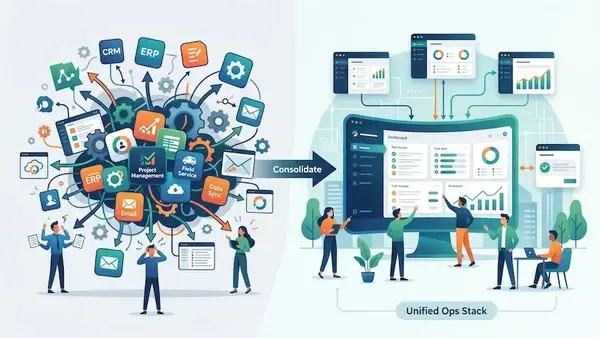
Lower Total Cost of Ownership: By consolidating your marketing, sales, and service technology stacks into one platform, you eliminate the "Integration Tax"—the hidden cost of paying developers to make different tools communicate with each other.
-
User Adoption: A CRM is only as good as the data entered into it. HubSpot's interface is designed for humans, not database administrators. High adoption means cleaner data, which means better business decisions.
-
The Ecosystem: With the HubSpot Connector and thousands of other integrations, HubSpot acts as the Single Source of Truth. Whether you are a tech startup using specialized dev tools or a software company with complex billing, HubSpot integrates the data into a single, actionable timeline.
By choosing HubSpot, you aren't just buying software; you are investing in a unified strategy that prevents your departments from becoming silos. You are choosing an engine designed not just to track business, but to win it.

5. Maximizing ROI: Turning the Engine into a Growth Machine
A CRM is not a passive expense; it is a capital investment. However, many organizations suffer from a "leaky" engine. They pay for the seats, but they don't capture the value. To win more business, you must move from simply "using" HubSpot to "optimizing" it for Return on Investment.
According to HubSpot's own data, 95% of its customers achieve a positive ROI after implementing the platform.
Of course, it doesn't happen overnight.
Auditing Your ROI: Is Your Engine Idling?
The first step to maximizing ROI is identifying where your growth is stalling. At Aspiration Marketing, we look for three key indicators of an "idling engine":
-
Lead Decay: MQLs are being generated but sit in the CRM for days before a salesperson reaches out.
-
Attribution Blindness: You know you're making sales, but you can't tell which marketing channel (PPC, Organic, Social) actually drove the revenue.
-
Manual Toil: Your high-paid sales reps are spending 30% of their day on data entry rather than talking to prospects.
By performing a "HubSpot Audit," you can identify these leaks. For example,
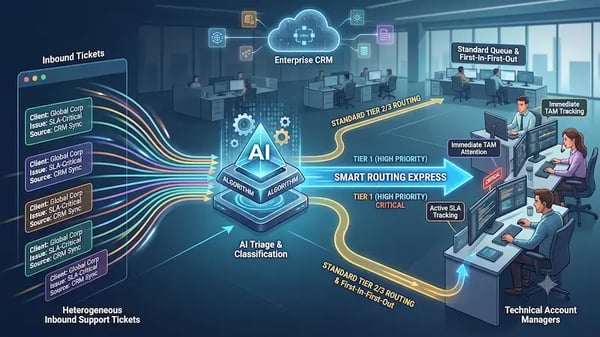
Implementing automated Lead Routing can reduce response times from 24 hours to 5 minutes, which statistically increases the likelihood of conversion by 21x.
Alternatively, it could be as simple as identifying extraneous data and performing a data cleanup of your CRM. For example,
Businesses with "clean" data grow 30% faster than those struggling with data debt.
These are direct, measurable ROI that justifies the platform cost.
Specific Use Cases:
Optimizing Sales Management in the Software Industry
The software and SaaS sectors face a unique challenge: the "Free Trial" or "Freemium" trap. This is an example where HubSpot shines with its ability to hone in on a newly identified subset of the MQL, the Product-Qualified Lead (PQL).
Instead of treating every sign-up the same, you can use HubSpot to track in-app behavior. If a user in a free trial reaches a specific threshold—such as inviting five team members or utilizing a "Power Feature"—HubSpot automatically elevates their lead score and alerts a Sales Development Representative (SDR). This ensures your sales team is spending time on the leads most likely to convert, rather than chasing "tire kickers."
Paid Advertising (PPC) and CRM Integration
One of the most powerful ROI levers in HubSpot is the Ads Tool. Traditionally, marketing teams look at "Cost Per Click" (CPC). However, CPC is a vanity metric. A $2.00 click that never buys is more expensive than a $50.00 click that closes a $10,000 deal.
By integrating Google and Meta ads directly into HubSpot, you close the loop. You can see which specific ad creative and which specific keyword resulted in a "Closed Won" deal. This allows you to shift your budget away from high-volume, low-intent traffic and toward the particular channels that win business. This year, the company that optimizes for Revenue, not Clicks, is the one that dominates the market.

6. Advanced HubSpot Tactics: AI, Segments, and Insights
To truly outperform the competition, you must leverage the "hidden" power of the HubSpot platform. This involves moving beyond basic contact management and into the realm of predictive analytics and hyper-segmentation.
A) From Lists to Segments: The Multi-Dimensional View
In the past, marketers used lists to group people. A list is binary: you are either on it, or you aren't. That's an outdated system. HubSpot has instead made the shift to segments. This is a game-changer for winning more business.
Segments in HubSpot are dynamic and cross-functional. You can create a segment of "Decision Makers at Software Companies with >$10M Revenue who have visited our pricing page twice in 48 hours AND have an open support ticket."
-
The Impact: This enables hyper-personalization. You can trigger a specific email from the CEO to this segment, acknowledging their interest and offering a direct line for technical questions. This level of precision makes your business appear much larger and more attentive than it actually is.
B) The Power of the HubSpot Connector
Data silos are the enemy of growth. The Deep Insights HubSpot Connector allows you to bridge the gap between your external content platforms and your CRM database.
-
Strategic Analysis: By using this connector, you can perform Attribution Mapping. You might discover that while your "Top 10 Tips" blog post gets the most traffic, your "ERP vs. CRM" comparison guide is the one that actually appears in the timeline of 80% of your closed deals.
-
Winning Strategy: This insight allows you to stop guessing. You can focus your content creation on the high-converting topics that move the needle, rather than just chasing vanity traffic.
C) AI-Powered Insights: The OpenAI, Breeze, and "Veo" Era
This year, AI is no longer a gimmick; it has become the backbone of the CRM. HubSpot's integration with tools like the OpenAI Connector allows for "Deep Research" into your own customer data.
-
Predictive Lead Scoring: Instead of you deciding which behaviors are important, the AI analyzes your last 1,000 "Won" deals and identifies the subtle patterns you missed—perhaps a specific sequence of page views or a certain job title change—and automatically scores new leads based on those patterns.
-
Sentiment and Tone Analysis: Using the Breeze AI to "listen" to recorded sales calls and support tickets. The system can flag a deal as "At Risk" if the sentiment of the conversation turns negative, even if the salesperson reports the call went "great."
-
Automated Content Generation: Beyond just writing emails, the VEO (Video Enhanced Observation) model allows tech startups to generate personalized video explainers for prospects based on their specific CRM data points, creating a high-touch feel at a low-touch cost.
D) Content Optimization: The Flesch Reading Ease Test
Effective communication is about clarity, not complexity. We recommend incorporating the Flesch Reading Ease Test into your HubSpot content strategy.
-
Why it matters: If your technical software explanation is written at a post-graduate level, you are losing the non-technical decision-makers.
-
The goal: To use HubSpot's editing tools to bring your content down to a "readable" level (8th-10th grade). This ensures that your value proposition is understood by every stakeholder in the buying committee, from the CTO to the CFO.
By combining these advanced tactics, you transform HubSpot from a "tool" into a "competitive advantage." You are no longer just tracking the business you have; you are using data to predict and win the company you want.
7. Implementation and Scaling: Your Roadmap to Success
The most powerful engine in the world is useless if it is never taken out of the crate. Similarly, the ROI of HubSpot is directly tied to the quality of its implementation. For tech startups and software companies, where agility is a survival trait, the implementation process must be both fast and foundational.

The Six-Phase Framework
Based on our experience and the latest benchmarks, a successful HubSpot rollout follows a structured 8-to-12-week framework:
-
Discovery & Process Mapping (Weeks 1-2): Before touching the software, you must map your current buyer's journey. As we've mentioned before, this is where you decide which operational guardrails are necessary and where your team needs the freedom to move fast.
-
Technical Architecture (Weeks 2-4): This involves setting up custom objects, Smart Properties, and integrating your "Back Office" (ERP) with your "Front Office" (CRM).
-
Data Migration & Cleansing (Weeks 3-5): Importing data from legacy systems like Pipedrive or Salesforce. The Deep Insights connector can be set up here to ensure historical data is actionable.
-
Automation & Workflow Build (Weeks 4-7): Building the Breeze AI agents and lead-scoring models that will handle the heavy lifting.
-
User Acceptance & Training (Weeks 7-8): This is critical. A CRM only works if the sales team uses it. Training should focus on the value for the sales representative (how it helps them close faster) rather than just providing data for the Manager.
-
Optimization (Ongoing): Using optimization tests on new templates and refining segments based on real-world performance.
DIY vs. Solutions Partner: The "Cost of Amateurism"
The "DIY" route tempts many SMBs. While HubSpot is intuitive, the complexity of a tech stack in today's industry—including AI agents and headless CMS architectures—makes "amateur" setup a long-term liability. Working with an accredited Solutions Partner typically results in a 20–40% faster implementation and, more importantly, ensures that you don't build "technical debt" into your CRM. A partner brings the perspective of hundreds of implementations, helping you avoid the "idling engine" traps that stall most companies.