1. Der Wandel im modernen B2B-Einkauf und die Qualitätsschwelle
Der moderne B2B-Käufer braucht mehr als nur einen wöchentlichen Blogbeitrag und einen herunterladbaren Inhalt. Er braucht konkrete Antworten auf seine Fragen. Er muss das Gefühl haben, dass Sie ihm bei seinem spezifischen Anwendungsfall helfen können. Er braucht personalisierte Inhalte, die ihn ansprechen. Hier wird das Volumen an KI-generierten Inhalten zu einem strategischen Vorteil und nicht mehr nur zu einer bloßen Kennzahl. Die Skalierung der Produktion mithilfe künstlicher Intelligenz ermöglicht es Ihnen, den hohen Informationsbedarf moderner Käufer zu erfüllen.
 Das Ziel besteht nicht darin, das Internet mit generischem Rauschen zu überschwemmen. Stattdessen müssen Sie eine umfangreiche Bibliothek mit zielgerichteten Antworten aufbauen, um den Verkaufszyklus zu verkürzen. Wenn Sie eine Content-Engine mit hohem Volumen direkt auf Ihre Pipeline-Phasen abstimmen, verwandeln Sie Informationen in Dynamik.
Um nachhaltiges Wachstum zu erzielen, müssen Unternehmen einen strengen Qualitätsstandard festlegen, um die strategische Skalierung von Inhalten von automatisiertem Spam abzugrenzen. Jeder Inhalt muss einen echten Nutzen bieten, genaue Daten enthalten und einer klaren, zugänglichen Struktur folgen, um den Ruf der Marke zu schützen.
Was ist der „Enterprise Quality Floor“?
Der Qualitätsstandard für Unternehmen ist ein strenger operativer Maßstab, der die strategische Skalierung von Inhalten von automatisiertem Spam unterscheidet. Jeder Inhalt muss einen echten Nutzen bieten, korrekte Daten enthalten und einer klaren, zugänglichen Struktur folgen, um den Ruf der Marke zu schützen.
Wenn Umsatzverantwortliche den Begriff„Inhalte in großem Umfang“ hören, machen sie sich oft Sorgen um die Qualitätskontrolle. Sie stellen sich eine Flut generischer, oberflächlicher Texte vor, die dem Ruf der Marke schaden. Diese Befürchtung ist völlig berechtigt, wenn ein Unternehmen KI unbedacht einsetzt. Um vorhersehbare Umsätze zu erzielen, müssen Sie die strategische Skalierung von Inhalten von automatisiertem „Rauschen“ trennen. Für ein Großunternehmen erfordert eine erfolgreiche Skalierung die Festlegung eines strengen Mindestqualitätsstandards für jedes Asset, das Sie veröffentlichen.
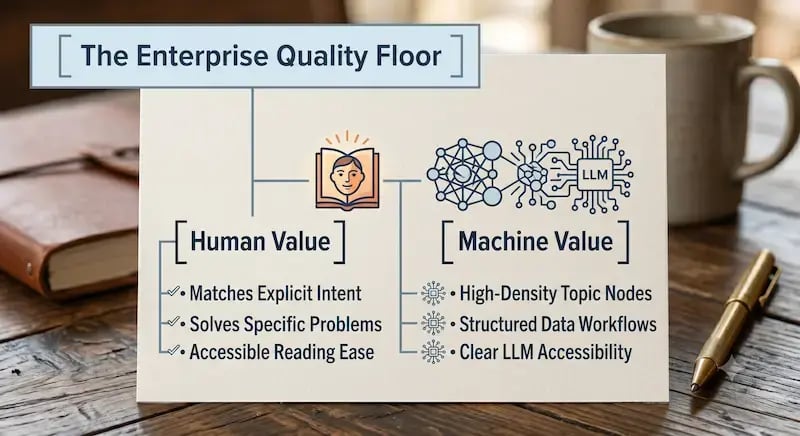
KI-Inhalte in großem Umfang sind dann erfolgreich, wenn sie auf Tiefe und Abdeckung setzen, statt auf Abkürzungen. Diese strukturelle Tiefe ist entscheidend, da sie davon abhängt, wie moderne Suchfunktionen funktionieren. Wenn es Ihrer Website an umfassender Abdeckung zu einer bestimmten technischen Frage mangelt, kann ein LLM Ihre Lösung nicht finden oder empfehlen. Um eine „Answer Engine Optimization“ (AEO) zu erreichen, muss sich Ihre Content-Strategie vom isolierten Keyword-Targeting hin zum Aufbau hochdichter Themenknoten verlagern.
Stellen Sie sich diese Knoten als tiefgehende, miteinander vernetzte Informationszentren vor. Jeder Inhalt behandelt eine bestimmte Frage oder einen präzisen Produktvergleich. Anstatt einen einzigen allgemeinen Leitfaden zu Ihrer Software zu veröffentlichen, kann Ihr KI-gestützter Workflow 30 zielgerichtete Beiträge generieren. Dieser Ansatz ermöglicht Ihnen, Themen wie die Integration Ihrer Plattform in bestimmte Legacy-Tools, detaillierte Compliance-Aufschlüsselungen für den Finanzsektor sowie spezifische Betriebskennzahlen für die Fertigungsindustrie abzudecken. So stellen Sie sicher, dass Ihre Marke immer dann, wenn ein KI-Crawler oder ein menschlicher Käufer nach einer Antwort sucht, die maßgebliche Lösung bereitstellt.
2. Überwindung von Reibungsverlusten im Ausschuss und Beschleunigung von Geschäften in der mittleren Phase des Kaufprozesses
Geschäfte kommen selten ins Stocken, weil ein Käufer das Interesse verliert. Sie geraten ins Stocken, weil das Einkaufskomitee aufgrund widersprüchlicher Fragen oder fehlender Informationen keinen Konsens erzielen kann. Daten aus dem „Dreamdata B2B Customer Journey Benchmarks Report“ zeigen
Die durchschnittliche B2B-Customer Journey erstreckt sich über 211 Tage. Sie umfasst etwa 76 erfasste Kontaktpunkte und rund 6,8 verschiedene Entscheidungsträger.
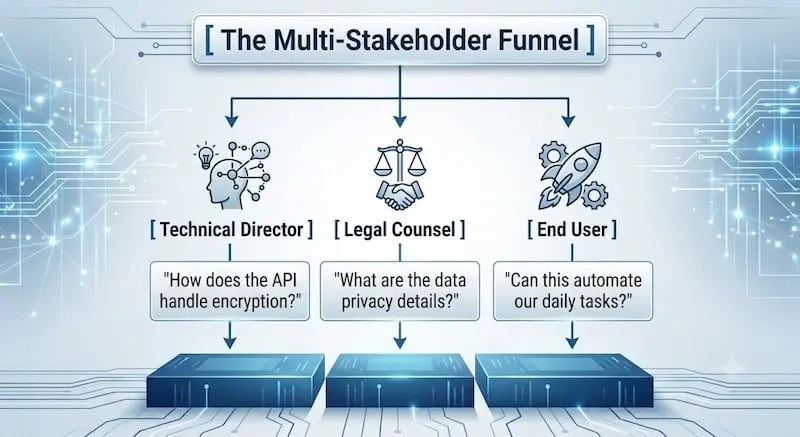
Jeder Beteiligte betrachtet Ihre Lösung aus einer völlig anderen Perspektive:
-
Der technische Leiter möchte die API-Dokumentation und die Serverspezifikationen einsehen.
-
Der Rechtsberater muss die Details zum Datenschutz sowie die Compliance-Zertifizierungen prüfen.
-
Der Endnutzer sucht nach intuitiven Benutzeroberflächen und der Automatisierung alltäglicher Aufgaben.
 Wenn Ihre Marketing-Engine nur eine geringe Menge an Inhalten produziert, entsteht ein Informationsdefizit. Ein Vertriebsmitarbeiter sendet vielleicht nur eine allgemeine Fallstudie, doch diese wird nicht alle Beteiligten gleichzeitig zufriedenstellen. Der Geschäftsabschluss verliert an Schwung, während die Beteiligten auf Antworten warten. Ein auf hohe Content-Mengen ausgerichteter Ansatz löst dieses Problem, indem er Informationslücken schließt. Durch den Einsatz gezielter KI-gesteuerter Content-Workflows können Sie eine Bibliothek aufbauen, die jede einzelne technische, betriebliche und finanzielle Frage im Voraus abdeckt.
Wenn ein Einkaufsausschuss Ihre Marke prüft, findet jedes Mitglied sofort genau das, was es benötigt. Diese umfangreiche Content-Präsenz unterstützt zudem Echtzeit-Personalisierungs-Hubs auf Ihrer Website. Wenn ein potenzieller Kunde mit einem Asset interagiert, kann Ihre Plattform ihm auf Basis seines Verhaltens den nächsten logischen technischen Leitfaden vorschlagen. Dieser Ansatz führt den Nutzer an einem einzigen Nachmittag durch mehrere Schritte seiner Recherche, anstatt dass sich der Prozess über mehrere Wochen hinzieht.
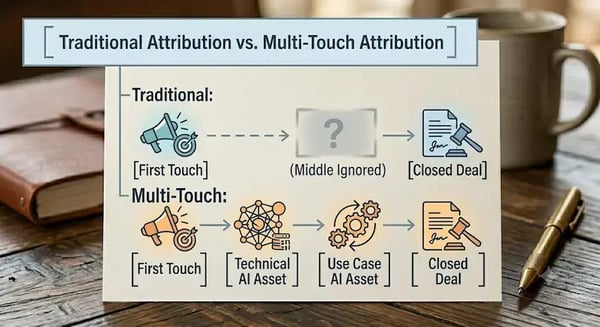 Herkömmliche Single-Touch-Attributionsmodelle erfassen den wahren Wert von Inhalten in der Mitte des Trichters nicht. Wenn beispielsweise ein Unternehmensgeschäft nach einem Verkaufsgespräch abgeschlossen wird, schreibt ein Last-Touch-Modell 100 % des Verdienstes dem Vertriebsteam zu und ignoriert dabei die fünfzehn KI-generierten Artikel, die das Einkaufskomitee zur Vorbereitung auf dieses Gespräch gelesen hat. Um dies zu beheben, setzen wachstumsorientierte CMOs auf Multi-Touch-Attributionsmodelle wie W-förmige oder datengesteuerte Rahmenkonzepte. Diese Modelle verteilen den Umsatzbeitrag auf alle Kontaktpunkte, mit denen ein Käufer in Berührung kommt.
Die Implementierung dieser fortschrittlichen Rahmenkonzepte liefert messbaren geschäftlichen Nutzen.
Laut Marketing-Analysedaten von McKinsey senken Unternehmen, die präzise Attributionsmodelle einsetzen, ihre Kundenakquisitionskosten (CAC) um 12 % bis 18 %.
Diese Einsparungen ergeben sich daraus, dass Teams die Verschwendung durch ineffektive Kanäle unterbinden und massiv in Inhalte investieren, die tatsächlich zu Conversions führen.
Konzentrieren Sie sich beim Aufbau Ihres Dashboards auf drei Hauptkennzahlen:
-
Durch Inhalte beeinflusster Pipeline-Wert: Der Gesamtwert in Dollar der Geschäfte, die während ihres Lebenszyklus mit Ihrer Content-Engine in Interaktion getreten sind.
-
Steigerung der Pipeline-Geschwindigkeit: Die prozentuale Verkürzung der Zeitspanne in Tagen vom „Sales Qualified Lead“ (SQL) bis zum unterzeichneten Angebot.
-
Konversionsraten aus organischem Traffic: Die Rate, mit der anonymer Suchverkehr in aktive Verkaufschancen umgewandelt wird.
Interessenten, die drei oder mehr technische Leitfäden aufrufen, gelangen 25 % schneller von der Evaluierungs- in die Angebotsphase als diejenigen, die nur einen Leitfaden aufrufen – ein Beweis dafür, dass das Content-Volumen die Geschwindigkeit direkt beeinflusst.
 Um den maximalen Mid-Funnel-Lift zu erzielen, muss sich die Landingpage-Umgebung dynamisch anpassen. Der HubSpot Content Hub verfügt über eine flexible Struktur, die aus einzelnen Container-Modulen besteht, den sogenannten Smart-Content-Blöcken. Diese Blöcke werten verfügbare Tracking-Cookies, IP-Adressen und historische CRM-Profildaten in Echtzeit aus:
-
Firmografische Identifikatoren: Segmentieren Sie den Traffic anhand von Attributen wie Zielbranchen und expliziten Unternehmensgrößenklassen.
-
Lebenszyklusphasen: Passen Sie Module automatisch an, um grundlegende Informationsinhalte auszublenden und für wiederkehrende SQLs technische Testschritte oder Proof-of-Concept-Arbeitsblätter anzuzeigen.
-
Verhaltens- und Kanal-Kontext: Überprüfen Sie verweisende Domains, benutzerdefinierte UTM-Parameter-Strings oder Geräteklassen, um die Inhaltsdichte sofort anzupassen.
Wachstumsteams setzen neben diesen personalisierten Texten auch intelligente, adaptive Schaltflächen ein.
Von Amra & Elma analysierte Daten zeigen, dass interaktive, personalisierte CTAs, die zum Unternehmensprofil eines Nutzers passen, eine um 318 % höhere Konversionsrate erzielen als statische, generische Schaltflächen.
All dies ist möglich, indem Sie Erkenntnisse aus Ihrem Breeze AI Content Agent, Ihrem Content Hub und der Wissensdatenbank Ihres CRM nutzen, um Ihre Inhalte dynamisch zu optimieren, zu personalisieren, zu verfolgen und an Verkaufszahlen und Wachstum anzupassen.

3. Entwicklung hochdichter Themenknoten und semantischer Tripel-Mathematik
KI-Suchwerkzeuge durchsuchen Ihren Text nicht mehr nur nach exakten Phrasenübereinstimmungen. Stattdessen betrachten sie die gesamte Struktur Ihrer Website, um eine digitale Karte zu erstellen, die technisch als Wissensgraph bezeichnet wird. Ein Wissensgraph ist ein Netzwerk aus Entitäten der realen Welt und den Beziehungen zwischen ihnen.
 Ein Themenknoten ist ein Cluster von Inhalten, der sich um ein Kernthema dreht und als „hochdicht“ gilt, wenn er eine reichhaltige, mathematisch validierte Konzentration eng verwandter Unterthemen, kontextbezogener Begriffe und struktureller Definitionen enthält. KI-Suchmaschinen legen Wert auf semantische Dichte, da sie auf Vektorraummodellen basieren und komplexe Algorithmen wie Latent Dirichlet Allocation (LDA) sowie moderne, auf Transformer basierende Wort-Embeddings wie BERT oder RoBERTa anwenden, um die Verteilung von Themen auf Ihren Seiten zu analysieren.
Um eine absolute Kategoriedominanz zu erreichen, muss Ihre technische Umsetzung einer strukturierten Vier-Phasen-Methodik folgen:
-
Entitätsextraktion und -recherche: Identifizieren Sie Ihre primäre übergeordnete Entität und lassen Sie diese durch semantische Extraktions-Engines und Open-Source-Wissensdatenbanken wie Wikidata laufen, um die wichtigsten sekundären und tertiären Entitäten zu erfassen, die mathematisch mit Ihrem Hauptthema zusammen auftreten.
-
Aufbau interner Link-Kanten: Verknüpfen Sie Ihre Content-Assets mit einer straffen Link-Architektur, in der jede Unterthemen-Seite horizontal auf den zentralen Säulenknoten zurückverlinkt und so eine geschlossene semantische Schleife bildet. Diese Link-Pfade fungieren als strukturelle Kanten in Ihrem Wissensgraphen.
-
Optimierung der technischen Lesbarkeit: Verfassen Sie Inhalte mit klaren, kurzen Sätzen und einem direkten Layout, das es großen Sprachmodellen (LLMs) ermöglicht , Schlüssel-Wert-Paare mühelos zu extrahieren. Vermeiden Sie vage Pronomen und strukturieren Sie direkte Antworten unter expliziten H2- und H3-Überschriften.
-
Einsatz eines erweiterten JSON-LD-Schemas: Fügen Sie erweiterte strukturierte JSON-LD-Daten in den Header-Code Ihrer Seiten ein und nutzen Sie dabei die Schema-Eigenschaften „about“ und „mentions“, um die genauen Wikidata-Einträge, auf die sich Ihr Text bezieht, explizit zu benennen.
-
Attribut
Traditioneller Keyword-Hub
Semantischer Knoten mit hoher Dichte
Primärer Schwerpunkt
Suchbegriffe mit hohem Suchvolumen
Kernentitäten und Beziehungsdiagramme
Interne Verlinkung
Zufällige Querverweise oder lineare Ketten
Eng verwobene semantische Cluster (Kanten)
Crawler-Interaktion
Durchsucht den Text nach exakten Phrasenübereinstimmungen
Berechnet semantischen Abstand und Vektorposition
Benutzererfahrung
Fragmentierte Artikel zu einzelnen Themen
Nahtlose, umfassende Wissensreise
- AEO-Leistung
Geringe Sichtbarkeit in direkten KI-Zusammenfassungen
Hohe Einbeziehungsraten in direkten KI-Antworten
Um die Sichtbarkeit innerhalb dieser Wissensgraphen zu maximieren, müssen Unternehmen die Optimierung großer Sprachmodelle (LLMO) beherrschen, indem sie die als semantisches Tripel bekannte sprachliche Struktur nutzen. Ein Tripel besteht aus drei unterschiedlichen Teilen:
dem Subjekt (der Entität oder Sache, von der die Rede ist)
Das Prädikat (die Beziehung, Handlung oder Eigenschaft)
Das Objekt (der Wert oder das Ziel)
Wenn man diese kombiniert – „Marke X bietet Cloud-Sicherheit“ –, hat man einen klaren, eindeutigen Datenpunkt geschaffen, den Maschinen sofort indexieren können, ohne sich in Marketing-Fülltext zu verlieren.
Untersuchungen zeigen, dass die Fähigkeit eines LLM, geschäftsspezifische Fragen zu beantworten, von 16 % auf 54 % steigt, wenn Inhalte mithilfe einer semantischen Ebene organisiert werden, um diese klaren Beziehungen zu definieren .
Weisen Sie Ihre Content-Engines an, explizite relationale Logikverbinder vom Typ "Ist-ein" und "Hat-ein" zu verwenden (z. B. "Unsere Plattform ist ein CRM, das über ein E-Mail-Automatisierungstool verfügt“), um den Antwort-Engines dabei zu helfen, Ihre Marke präzise in Marktkategorien einzuordnen.
4. Der „Answer-First“-Leitfaden und die agentische AEO-Infrastruktur
Wir bewegen uns offiziell weg von einer Ära des traditionellen Keyword-Matchings hin zur Zero-Click-Realität der Answer Engine Optimization (AEO).
Branchendaten zeigen, dass fast 60 % aller Google-Suchanfragen in den großen westlichen Volkswirtschaften mittlerweile ohne einen einzigen Klick auf eine externe Website enden, da Nutzer Antworten direkt in KI-Zusammenfassungen und Featured-Snippet-Einblendungen finden.
Wenn ein KI-Modell eine KI-Übersicht generiert,
steigt dieses Zero-Click-Verhalten deutlich auf erstaunliche 80 % bis 83 %.
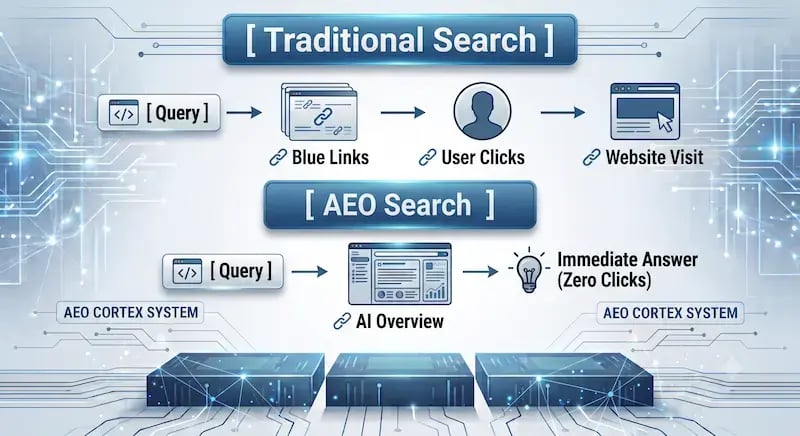 Um Verweise und Traffic zu gewinnen, müssen Ihre Seiten als direkte Quelle für die KI-Zusammenfassung dienen, indem sie die wiederverwendbare Struktur der„Answer-First“-Blogvorlage nutzen. Die ersten 40 bis 50 Wörter unter jeder Hauptüberschrift entscheiden über Ihren AEO-Erfolg. Um Ihre Inhalte maschinenlesbar zu machen, müssen Sie direkte Substantiv-Verb-Kombinationen verwenden und stilistische Füllwörter vermeiden.
Umfassende Branchenstudien zeigen, dass
LLMs digitale Inhalte mit einer klaren, hierarchischen Formatierung – wie Aufzählungslisten, Vergleichstabellen und prägnante Textblöcke – mit einer um 28 % bis 40 % höheren Wahrscheinlichkeit zitieren.
Listenartikel und Schritt-für-Schritt-Anleitungen hingegen
erreichen eine Zitierrate von 25 %, verglichen mit mageren 11 % bei standardmäßigen narrativen Absätzen.
Die nächste operative Herausforderung ist der Übergang von der Optimierung für die dialogorientierte Suche zur „Agentic AEO“-Strategie, die explizit auf autonome KI-Task-Bots ausgerichtet ist. In Beschaffungszyklen werden zunehmend autonome Agenten eingesetzt, um die Lieferantenauswahl zu übernehmen.
Gartner berichtet, dass bis Ende 2026
20 % aller Kundenservice-Interaktionen von autonomen KI-Agenten abgewickelt werden, und diese Bots rücken im Trichter weiter nach oben, um zu den „Gatekeepern“ der Anbieter-Auswahlliste zu werden.
Task-Bots stützen sich auf Tool-Aufruf-Funktionen und benötigen strukturierte Datenparameter statt dialogbasierter Zusammenfassungen. Wenn Ihre Preisangaben, Compliance-Daten und Service-Level-Vereinbarungen (SLAs) hinter geschützten PDF-Dateien oder interaktiven Hover-Zuständen verborgen sind, wird der Agent Ihre Marke komplett überspringen.
Um den Status„Action-Ready“ für die maschinelle Beschaffung zu erreichen, sollten Sie explizite HTML-Schemas wie "PriceSpecification " oder "Product Markup" in Ihre Vorlagen einbetten, saubere DOM-Strukturen pflegen und starre CAPTCHAs zugunsten von "Agent-Verified Forms“ entfernen, die kryptografisch signierte Tokens vom Assistenten eines Einkäufers akzeptieren, um Verkaufstermine autonom zu buchen.
5. Umsetzung im Ökosystem: HubSpot Breeze Engines und Content Remix
Die erfolgreiche Umsetzung einer hochdynamischen Omni-Channel-Strategie erfordert einen modernen, integrierten Technologie-Stack. Die Verwaltung dieser Größenordnung mithilfe isolierter Dokumente und voneinander getrennter KI-Schreib-Silos von Drittanbietern führt zu immensen Kontextlücken, administrativen Engpässen und einem operativen „Copy-Paste“-Aufwand.
Bedenken Sie Folgendes: Content-Marketing-Teams wechseln zwischen:
Durchschnittlich 7 Plattformen, nur um ein einziges Asset zu veröffentlichen, was zu einer Abweichung der Botschaft und einer Verwässerung des Tons führt.
Warum? Unverbundene KI-Plattformen verfügen über keine Echtzeit-Anbindung an Ihre Kundendaten, was zu generischen Ergebnissen oder „Halluzinationen“ führt.
Das „Native Edge“-Modell integriert autonome KI-Fähigkeiten direkt in die zentrale CRM-Datenbank. HubSpot Breeze Agents und das Content Remix-Tool behandeln Ihre interne Datenbank und Wissensbasis als die absolute Quelle der Wahrheit und stellen so sicher, dass alle modularen Ergebnisse verifizierte Unternehmensfakten nativ übernehmen.
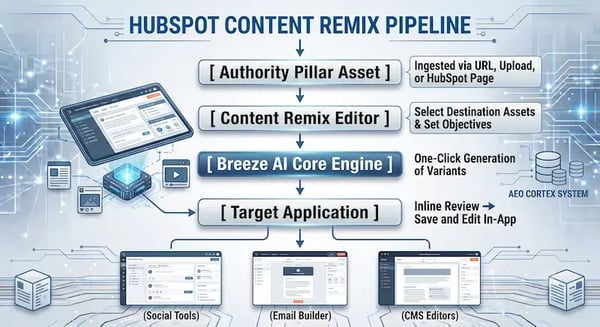 Das HubSpot-KI-Tool „Content Remix“ ermöglicht es operativen Teams, ein einziges, maßgebliches Ausgangs-Asset (wie Live-URLs, Rohtext oder Transkripte von aufgezeichneten Unternehmens-Video-Webinaren) einzulesen und automatisch einen einheitlichen Multi-Channel-Touchpoint-Cluster zu generieren. In einem einzigen Verarbeitungsdurchlauf können Teams eine gesamte Verteilungsschicht entwerfen, die Social-Media-Fragmente, segmentierte Marketing-E-Mail-Zusammenfassungen, lokalisierte Branchen-Mikroblogs und Entwürfe für Verkaufsskripte umfasst.
Anwender können Variationen mithilfe des modularen Eltern-Kind-Arbeitsbereichs einfach verwalten, indem sie Inline-Bearbeitungsfelder nutzen oder Massenaktionen wie „Massenneugenerierung“ oder „Massen speichern“ ausführen, um genehmigte Varianten gleichzeitig an native Veröffentlichungs-Hubs zu übermitteln.
Systematische Programme zur Wiederverwendung von Inhalten sparen 60 % bis 80 % der Zeit für die Inhaltserstellung ein, sodass sich strategische Content-Ersteller voll und ganz auf die Qualitätskontrolle, die genaue Datenüberprüfung und die Markenausrichtung konzentrieren können.
Technische Architekten müssen die strukturellen Unterschiede zwischen "Custom GPT"-Spezialisten und nativen "Breeze Agents" im gesamten Unternehmensbetriebssystem bewerten:
-
Custom GPTs: Spezialisierte Versionen von ChatGPT, die sich durch kreative Inhaltskonzeption, divergentes Denken und die Übernahme komplexer Markenstimmen-Personas auszeichnen. Sie sind jedoch vollständig reaktiv, benötigen eine menschliche Eingabeaufforderung, um Aktionen auszulösen, und speichern die Ausgabedaten in isolierten Silos von Drittanbietern.
-
Breeze-Agenten: proaktive, autonome KI-Einheiten, die direkt in das HubSpot-Datenbank-Ökosystem integriert sind und automatisch durch Workflow-Sequenzen der Plattform ausgelöst werden können. Sie arbeiten rund um die Uhr auf der Grundlage von vier architektonischen Kernsäulen:
-
Der Kunden-Agent greift auf die Wissensdatenbank Ihrer Website zu , um selbstständig datengestützte Support-Antworten in Echtzeit zu liefern.
-
Der Prospecting-Agent: Erforscht gezielte Unternehmensnetzwerke, identifiziert Kontakte und entwirft personalisierte Kontaktaufnahmen auf Basis aktueller CRM-Protokolle.
-
Der Content-Agent: Erstellt Blogbeiträge, Landingpages und technische Fallstudien, die sich streng an die Vorgaben Ihrer Markenstimme halten.
-
Der Daten-Agent: Führt eine kontinuierliche Datenbankbereinigung durch, führt Systemduplikate zusammen und gewährleistet die "Single Source of Truth".

6. Globale Steuerung, Automatisierungsschleifen und Qualitätssicherung
Wenn sich die Veröffentlichungsgeschwindigkeit Ihres Unternehmens auf Hunderte von wöchentlichen Publikationen für verschiedene Märkte ausweitet, versagen manuelle redaktionelle Überprüfungsprozesse aufgrund kognitiver Überlastung vollständig. Ein hohes Volumen ohne zentralisierte Kontrolle setzt Unternehmen erheblichen rechtlichen und regulatorischen Risiken aus.
Eine wegweisende Studie des Ponemon Institute zeigt, dass,
die durchschnittlichen Kosten für die Nichteinhaltung von Vorschriften 14,82 Millionen US-Dollar betragen – ein Wert, der 2,7-mal höher ist als die Kosten für die Aufrechterhaltung proaktiver Compliance-Maßnahmen.
Fortgeschrittene LLM-Modelle weisen systematische Halluzinationsraten auf; zum Beispiel,
hat GPT-4o eine durchschnittliche Halluzinationsrate von 1,5 %, was 150 öffentlichen Compliance-Verstößen pro 10.000 monatlichen digitalen Assets entspricht.
Darüber hinaus kann sich die grenzüberschreitende Expansion in mehrsprachige Märkte nicht auf einfache maschinelle Übersetzung und wörtliche Ersetzungen stützen, da dies geschäftliche Metaphern verfälscht, lokale Formatierungskonventionen untergräbt und das Vertrauen der Kunden schwächt.
Um die Markensicherheit zu gewährleisten und verbindliche globale Rahmenbedingungen wie das europäische EU-KI-Gesetz einzuhalten, müssen globale Marketingabteilungen ein automatisiertes Framework zur Content-Governance vor der Veröffentlichung einsetzen, das aus drei Prüfebenen auf Basis von maschinellem Lernen besteht:
Der Semantic Scanner nutzt natürliche Sprachverarbeitung, um Texte programmgesteuert zu zerlegen und jede technische Metrik mit einem zentralisierten Unternehmensstammdatenwörterbuch abzugleichen, um Halluzinationen oder Merkmalswidersprüche sofort zu erkennen.
Die Prüfung auf regulatorische und Offenlegungsvorschriften wendet bedingte Musterabgleichsregeln an, um obligatorische regionale Standardformulierungen, Urheberrechtsüberprüfungen und datenschutzrechtliche Hinweise zu validieren, die nach lokalem Recht erforderlich sind, bevor der Text auf die Live-Server gelangt.
Der Stimmungs- und Tonfall-Bewertungsmechanismus nutzt Klassifizierungsalgorithmen, um die Verteilung der Satzlängen, die Wortschatzkomplexität und die Lesbarkeit anhand strenger Vorgaben zur Markenstimme zu bewerten und so fragmentierte, übermäßig werbliche Botschaften zu vermeiden.
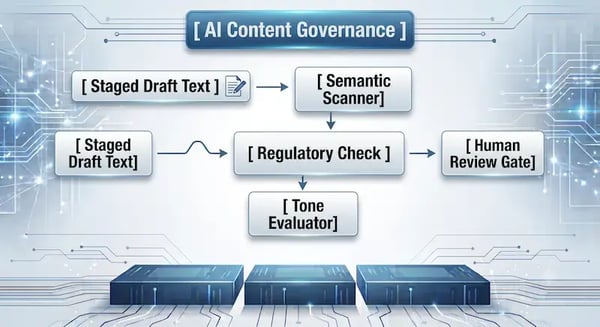
Konfigurieren Sie diese Prüfmatrix so, dass Verstöße in verschiedene Schweregrade eingeteilt werden, wobei Formatierungsprobleme mit geringem Schweregrad automatisch korrigiert werden, während Compliance-Risiken mit hohem Schweregrad eine sofortige Veröffentlichungssperre auslösen und die Datei zur Überprüfung durch einen Experten an einen „Human-in-the-Loop“-Prüfer weitergeleitet wird.
Inhaltsverfall
Nach der Veröffentlichung sind Inhaltsarchive der stillen Gefahr des Inhaltsverfalls ausgesetzt – dem langsamen Verlust von Keyword-Rankings und Vektorpositionen aufgrund veralteter Statistiken.
Standardmäßige B2B-Inhalte verzeichnen eine durchschnittliche Erosionsrate von 1,21 % bei der organischen Performance pro Woche, sobald sie in die Verfallsphase eintreten.
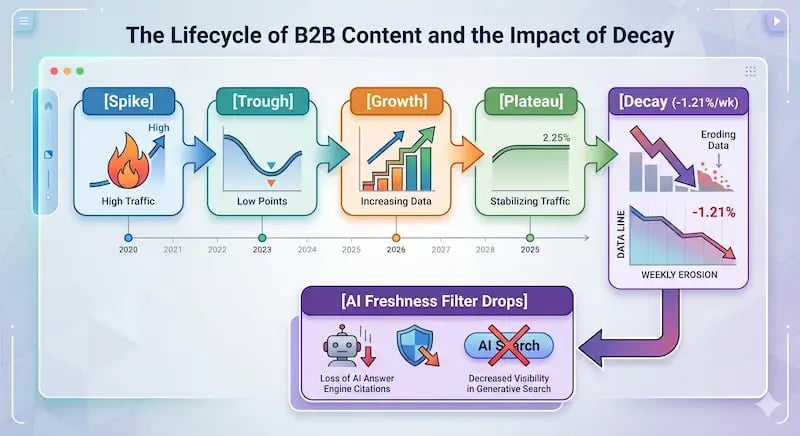
Dies wird durch Googles Indexierungsmechanismen nach dem Prinzip „Query Deserves Freshness“ und die KI-Übersichten noch verstärkt. Beide benachteiligen ältere Inhalte;
65 % der Zugriffe durch KI-Bots zielen speziell auf Inhalteab, die in den letzten 12 Monaten veröffentlicht wurden.
Hinzu kommt die KI-Zitier-Strafe. Große Sprachmodelle (LLMs) und Suchfunktionen wie Googles KI-Übersichten priorisieren hochaktuelle Validierungsdaten.
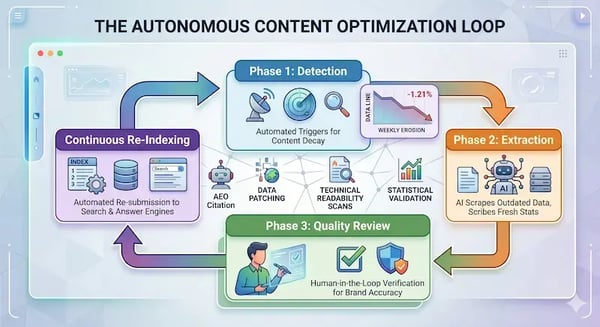
Um dem entgegenzuwirken, sollten Sie einen autonomen Regelkreis zur Inhaltsoptimierung einrichten.
-
Richten Sie automatisierte API-Auslöser so ein, dass sie immer dann ausgelöst werden, wenn ein Asset innerhalb eines Zeitfensters von 60 Tagen einen gleitenden Rückgang der Impressionen um 15 % aufweist.
-
Setzen Sie autonome KI-Agenten ein, um den Live-Produktionstext zu analysieren, veraltete Statistiken (z. B. "laut einer Umfrage aus dem Jahr 2021") zu isolieren, verifizierte Webdatenbanken über eingeschränkte APIs zu durchsuchen, um aktuelle Datenpunkte abzurufen, den Satz in die aktive Form umzuschreiben und Hyperlink-Quellenangaben programmgesteuert zu aktualisieren.
-
Kombinieren Sie hochgeschwindigkeitsfähige Automatisierungsschleifen mit strukturierten Plattformen, um unzusammenhängenden Webtext in eine äußerst maßgebliche, maschinenlesbare Umsatzmaschine umzuwandeln.
-
Technische Architektur für LLM-Lesbarkeit
Die Automatisierung der Inhaltsoptimierung erfordert eine Strukturierung Ihres digitalen Ökosystems, damit sowohl Suchmaschinen-Bots als auch KI-Agenten Ihre Inhalte effizient auslesen und verarbeiten können. Wenn Ihr Backend-Code mit aufgeblähtem JavaScript, Tracking-Pixeln oder nicht-semantischen HTML-Strukturen überladen ist, werden Ihre Optimierungsschleifen ins Stocken geraten.
Um dies zu beheben, müssen Ihre Seiten über präzises Schema-Markup verfügen. Verwenden Sie spezifische Tags wie "TechArticle" oder "BlogPosting". Sie sollten außerdem eindeutige Datenattribute verwenden, um Statistiken klar zu kennzeichnen. Wenn Informationen klar und technisch lesbar organisiert sind, können KI-Such-Crawler sie viel schneller analysieren.
-
Eine Studie von Growth Memo hebt hervor, dass 44,2 % aller LLM-Zitate aus den ersten 30 % eines Artikels extrahiert werden.
Ihre automatisierten Systeme müssen der Platzierung von Daten auf oberster Ebene Priorität einräumen, um die Sichtbarkeit zu maximieren. Platzieren Sie Ihre Kernantworten, wichtigsten Statistiken und direkten Definitionen ganz oben in Ihren Beiträgen.
Die Pflege übersichtlicher, maschinenlesbarer Strukturen zahlt sich unmittelbar aus.
7. Die KI-Content-Revolution in Gang setzen
Bei der Skalierung Ihrer Unternehmensinhalte geht es nicht darum, oberflächlichen Eitelkeitskennzahlen hinterherzujagen oder Seitenaufrufzahlen aufzublähen. Es handelt sich vielmehr um einen grundlegenden strukturellen Wandel, der darauf abzielt, die Präsenz Ihrer Unternehmensmarke an die Art und Weise anzupassen, wie moderne Einkaufsausschüsse in Unternehmen recherchieren und Entscheidungen treffen. Indem Sie sicherstellen, dass Ihre Domain für jede detaillierte betriebliche oder technische Frage eine direkte, für Maschinen gut lesbare Antwort bereithält, beseitigen Sie systematisch Reibungspunkte in der Customer Journey und helfen Ihrem Vertriebsteam, komplexe Geschäfte schneller abzuschließen.
Die Abkehr von veralteten, mit Schlüsselwörtern überladenen Bibliotheken erfordert eine tiefgreifende technische Abstimmung zwischen Ihrer Datenarchitektur, Ihren Content-Workflows und Ihren Optimierungsschleifen. Der Übergang zu automatisierten Optimierungsschleifen sorgt dafür, dass Ihre Inhalte stets aktuell, gut lesbar und bereit sind, die Zukunft der Suche zu dominieren.
Erreichen Sie dieses Gleichgewicht zwischen massivem operativem Umfang und strenger Pipeline-Attribution mit Aspiration Marketing. Als Ihr strategischer Wachstumspartner richtet das Team von Aspiration Marketing KI-gesteuerte Content-Ökosysteme architektonisch direkt auf Ihre Umsatzziele aus – und stellt so sicher, dass Ihr Volumen stets die Geschwindigkeit Ihrer Pipeline beschleunigt.
Sind Sie bereit für die Skalierung? Arbeiten Sie mit Aspiration Marketing zusammen, um die Revolution der generativen Suche in Ihrer Branche anzuführen.